


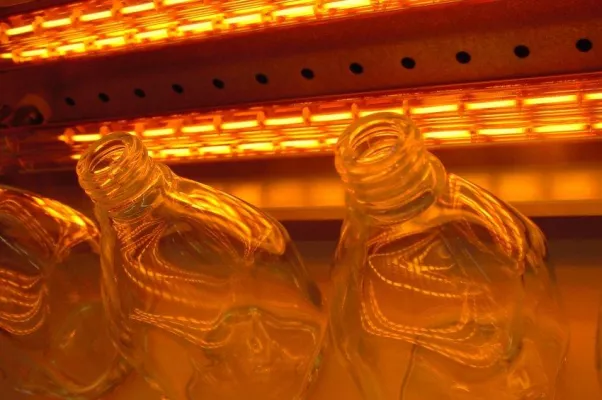
Stop Wasting Heat: Getting Your Infrared Spectra Actually Right
Most standard infrared heating tubes are just… guessing. They pump out energy in a broad curve, but if that curve doesn’t line up with what your material actually wants to absorb, you’re basically just heating up the air in the room. It’s a waste of power. And if you’re working with glass that has specific chemical additives, a generic lamp is almost always the wrong tool for the job. That’s where we come in. We don’t do “standard.” We build tubes that match the exact absorption frequency of your specific substrate.
The “Fingerprint” Problem
Think of every material as having its own fingerprint. There are specific wavelengths where it just soaks up energy, and others where it ignores it completely. If your glass additives are waiting for a specific wavelength and your lamp isn’t hitting it, the photons just bounce off the surface. It’s frustrating. We fix this by messing with the filament composition and the envelope coating. We shift the emission curve so the heat actually gets inside the glass.
How we actually do it
We do more than just crank up the wattage. That’s the easy way, but it’s not the right way. Instead, we dive into the gritty details: the internal gas pressure and the doping levels of the quartz tube. By tweaking these, we can slide the heat output from short-wave to medium-wave or create a really tight, narrow-band peak. You send us the absorption spectrum of your additive. We build the tube to hit that exact spot. Simple as that.
The trade-offs (because nothing is magic)
Here is the honest part: custom spectra make energy transfer way more efficient, but there’s a catch. Narrow-band tubes don’t have the same total “glow” as broad-spectrum lamps. You get much deeper penetration, but you might find you need a few more tubes to keep the surface temperature where you want it. And a quick heads-up for when you’re wiring these in: keep a close eye on your PID controllers. Because the glass absorbs this energy so much better, it can heat upfast. Really fast. If you aren’t careful with your ramp rates, you’re asking for thermal shock. Also, check your cooling fans. If the housing gets too hot because the fans aren’t up to the task, your tube life is going to tank. Keep it cool, and these things will last.