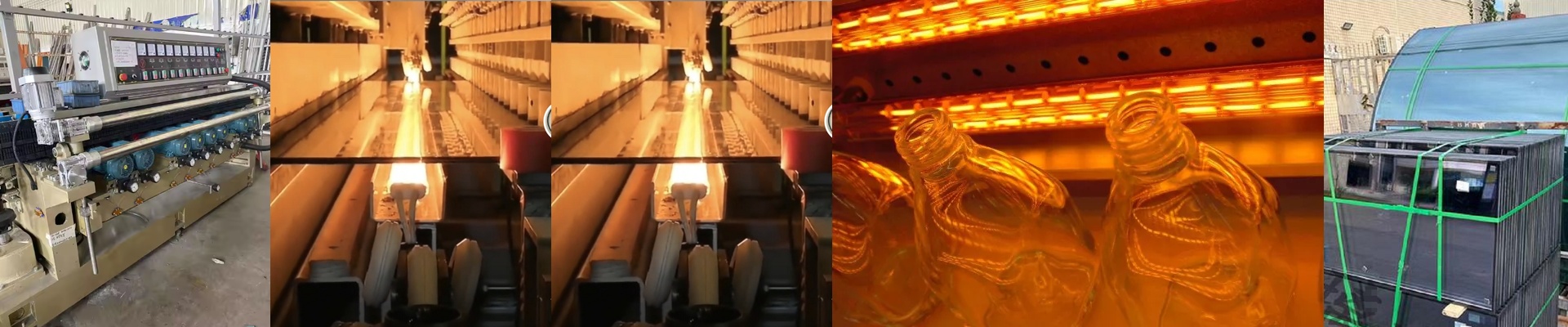

On the glass line, the annealing lehr is where you make yield—or watch it disappear. A slow ramp, a cold spot, or uneven heat? That’s how you end up with warp, micro-cracks, and scrap piling up fast. We built this fiber annealing heater to run in production, not just look good on paper—steady, repeatable, and predictable shift after shift. What actually matters under the hood The element is high-emissivity fiber, so it couples hard to the glass and throws heat evenly—no hot spots. You get fast response, tight zone control, and stable output that holds up over long runs. It runs on standard industrial voltages, and the terminals and shielding are spec’d to live with vibration and dust. Dimensions and mounting are set up for a drop-in fit on most annealing lehrs, so you spend your time making glass, not reworking the line. Why this works where annealing counts Annealing is all about controlled cooling to knock out thermal stress. This heater keeps temperature uniform across the belt width, so the glass cools consistently and comes out ready for inspection—less rework. Fast ramp-up shortens the cycle, and that adds up to more throughput per shift. Energy stays disciplined because the element heats on demand and holds setpoint without overshoot. In practice, that means fewer rejects, steadier output, and a quieter, safer area to work. The field notes you’ll thank yourself for later Installation is straightforward, but clearances matter—glass, fixtures, anything nearby. Stick to the specified gap to avoid contact and to keep the element from getting hammered mechanically. After a cold start, give it a short warm-up to settle into stable control. Plan maintenance around line stops: check connections, clean surfaces, and verify insulation integrity. This is industrial equipment, not a one-size-fits-all box. Treat it like part of the process, and it will perform.