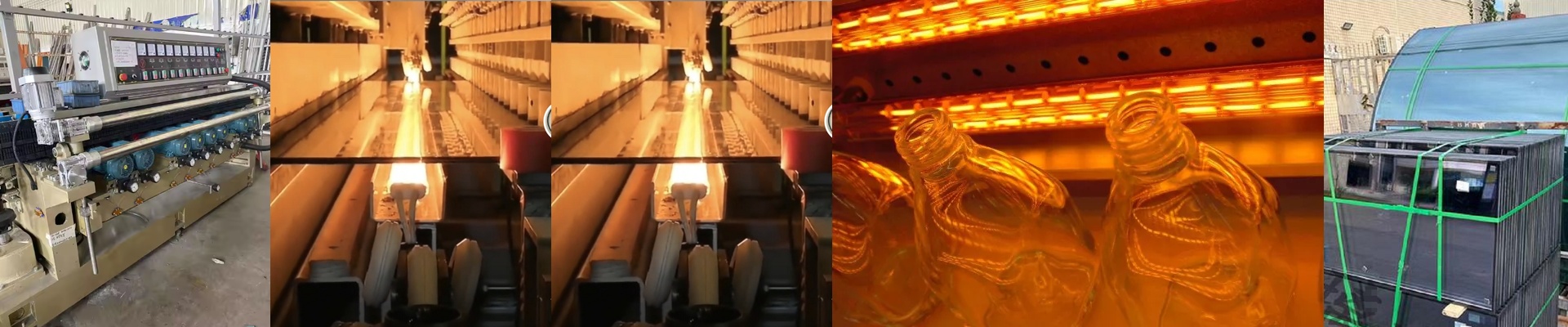
On the floor, a long warm-up drags the whole line down. A hot zone that isn’t uniform in the bending furnace? That’s how you get cracks. Heat isn’t just another parameter. It’s the bottleneck and the quality checkpoint. When heating lags, scrap piles up and throughput takes a hit.
What matters under the hood
We build custom quartz heaters around short-wave infrared (SWIR) emission, tuned for snappy response and tight temperature control. Power is matched to the process window—typically 1–3 kW/ft of active length—with fast ramp rates so cycle time stays where it needs to be. The quartz envelope gives you high emissivity and low thermal mass, so the heat tracks the power signal instead of dragging behind like heavy elements do. Spec the voltage and footprint to your machine, and we set up standard mounting and terminals so the swap is straightforward.
Why this lands on the line
In hot bending, a level thermal field across the mold keeps local sag and stress fractures from showing up, and that lifts first-pass yield. In tempering, a quick, even preheat gets the glass to target surface temperature faster, shortens the quench, and lets you run the line quicker. During lamination, repeatable heating follows the PVB/EVA/SGP cure profile without edge dry-out or bubbles, so optical defects drop. Coating drying gets predictable, with steady throughput and lower energy per part. The upshot: fewer rejects, stable cycles, and less kWh per piece.
The practical details you can’t skip
These heaters run hot at the surface, so clearances and guarding matter. Check your reflector geometry and airflow—quartz does its best work when radiation dominates and convection is kept in check. Share the machine interface details up front—voltage, lead length, and mounting tolerances—so you don’t run into fit issues. With proper alignment and cooling, these units hold stable output for thousands of hours, keeping the line moving without unplanned stops.