Getting the Heat Right for Glass R&D
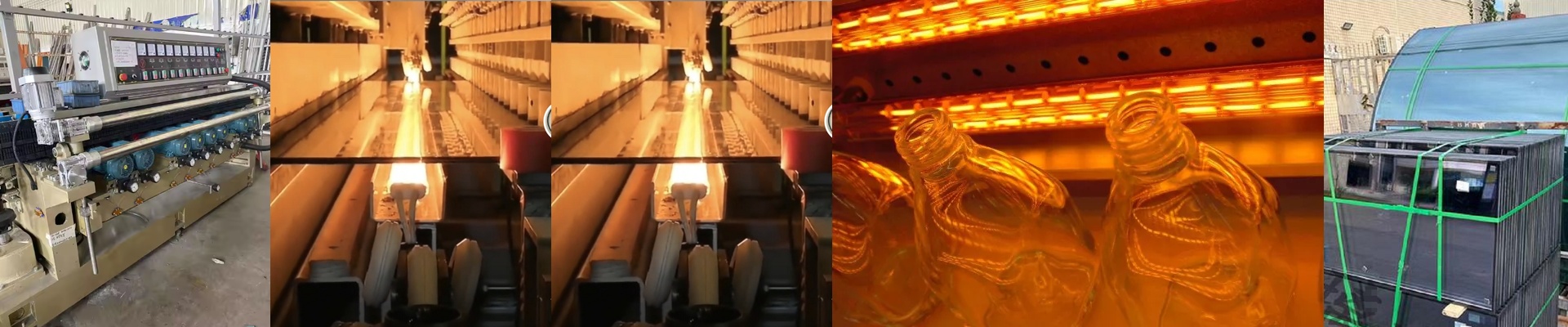
If you’ve ever tried using a standard, off-the-shelf infrared lamp for glass research, you know the frustration. They’re designed to be uniform. They heat everything the same way. But in a lab, “uniform” is rarely what you actually want. When you’re testing phase transitions or hunting for stress points in glass substrates, you need a gradient. You need some spots blistering hot and others barely warm. That’s why we stop worrying about the length of the tube and start focusing on the power density. It’s all about where the heat actually lands. The trick is in the winding. Most lamps just spread wattage in a straight line. Boring. Instead, we play around with the tungsten filament—changing the diameter and the pitch of the winding. This lets us build “hot zones” and “cool zones” right into the lamp. Imagine hitting 1200°C in one tiny 50mm section while the rest of the tube just stays at a baseline. You get a heat map that actually fits your experiment, rather than trying to force your experiment to fit the lamp. A word of caution on the quartz. To handle that kind of intensity, we use high-purity quartz envelopes. They’re tough, but they have a breaking point. If you cram too much power into one short segment, the quartz can actually soften or start to bow. And here’s the real kicker: your mounting clips. If they’re too tight or create a pressure point, the tube will snap the moment it goes through a thermal cycle. It’s a heart-breaking sound. Why this matters for your samples. When you’re messing with new glass composites, the ramp-up rate is the only thing that matters. With a custom-distributed lamp, you can basically shrink an industrial furnace down to your lab bench. Sure, you can plug it into a PID controller to tweak the output, but the physical layout of that filament is what does the heavy lifting. It takes the guesswork out of the process. If your samples are warping or acting weird, stop blaming the glass. It’s probably your lamp’s power distribution holding you back.